

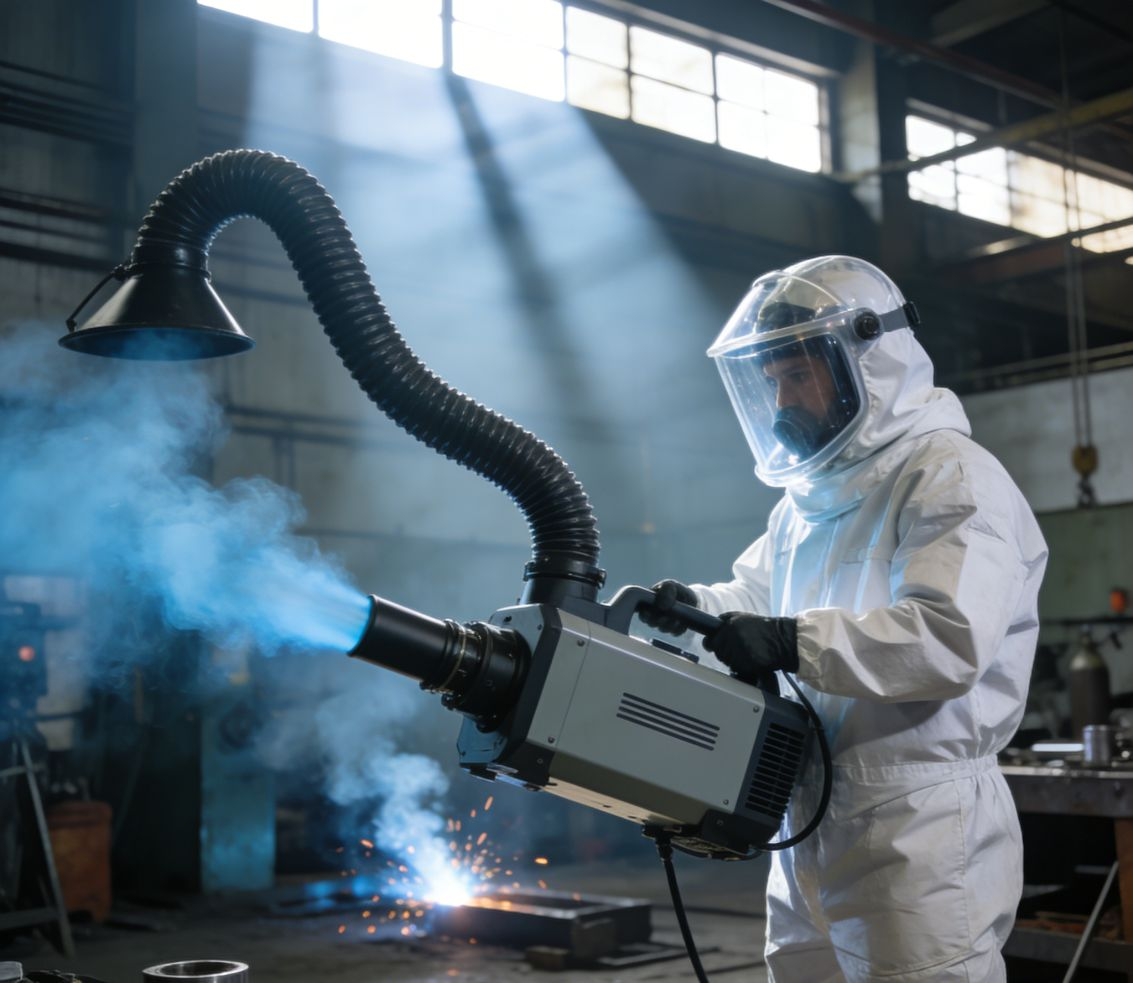
Smoke purifiers in the modern world: dual empowerment of technological innovation and global governance
In the diverse scenarios of the modern world, the forms of smoke pollution have long broken through the scope of traditional industrial smoke and dust – harmful smoke and dust from laparoscopic surgery, catering fumes from public chimneys in residential buildings, and welding fumes from electronic workshops, which are posing a comprehensive threat to the ecological environment and human health. Smoke purifiers, as the core equipment for dealing with such pollution, have been upgraded from a single industrial device to intelligent systems covering multiple fields such as healthcare, people’s livelihoods, and industry. Driven by technological innovation and global environmental demands, it has not only reshaped the pollution control model of modern society, but also become an important indicator of the environmental technology strength and livelihood security level of various countries, deeply integrated into the ecological and development texture of the modern world.
In the dimension of health protection, purifiers have built a micro defense line for global public health, especially becoming a key supplement to address air pollution. With the global spread of urbanization and industrialization, PM2.5、 The hazards of pollutants such as formaldehyde and TVOC have broken through geographical limitations, and respiratory health risks are widespread from industrial sites in developed countries to emerging urban areas in developing countries. The technical value of compliant purifiers has been authoritative verified: in standard experimental environments, models using “HEPA filter+catalytic decomposition” technology can reduce formaldehyde concentration from exceeding the standard state to below the safety threshold within 2 hours, with a PM2.5 removal rate of up to 99.8%. This efficiency is more critical in special scenarios – the ICU of a tertiary hospital can reduce the total number of bacteria in the air from 150 CFU/m ³ to 5 CFU/m ³ through an intelligent purification system, directly promoting a 27% decrease in surgical infection rates; In heavily polluted cities, home purifiers can create “indoor safe zones” for sensitive populations such as the elderly and children, alleviating the risk of asthma, respiratory infections, and other illnesses. From the perspective of global health governance, the popularization of air purifiers has reduced the medical burden caused by air pollution, especially providing low-cost health protection solutions for developing countries, becoming an implicit driving force for “health equity”.
However, the rapid popularization of smoke purifiers in the modern world is accompanied by new challenges such as insufficient technological adaptability and lack of industry standards, which have become hidden shortcomings in global environmental governance. At the technical level, the complex characteristics of modern smoke pollution require higher requirements for purifiers – VOCs in industrial smoke, toxic gases in medical smoke, polycyclic aromatic hydrocarbons in catering fumes, and other pollutants have complex components. A single technology purifier is difficult to achieve full efficiency purification, and some equipment claims to be “omnipotent purification”, but there are actually shortcomings in purification efficiency. At the market level, the confusion between false advertising and indicators still exists. Some companies deliberately exaggerate the “purification rate” data while avoiding the core clean air volume (CADR) and cumulative purification indicators, misleading consumers’ choices. This chaos has spread to the global market through cross-border e-commerce platforms. In terms of environmental protection, the burden of consumables and secondary pollution problems of traditional filter type equipment have not been completely solved. Over ten million tons of waste smoke purifier filters are generated worldwide every year, which contain heavy metals and harmful gas adsorbents, becoming a new challenge for modern waste disposal and forming a clear contradiction with the global sustainable development goals.
Technological innovation is driving modern smoke purifiers to overcome the “double-edged sword” dilemma and transform towards intelligence, consumables free, and full scene. At the core technology level, composite purification technology has become mainstream – combining electrostatic adsorption, photocatalytic oxidation, and intelligent monitoring, which can efficiently remove particulate matter and decompose gaseous pollutants such as VOCs. Ozone emissions are controlled below 0.01ppm, a 98% reduction compared to traditional technologies. Intelligent upgrading has become a key breakthrough. Smoke purifiers equipped with IoT modules can achieve remote monitoring, fault warning, and consumable life reminders. Industrial grade equipment can also be connected to enterprise intelligent manufacturing management platforms, forming a closed-loop management system of “pollution monitoring intelligent purification data traceability”. Sustainable technologies are accelerating their implementation, and technologies such as consumable free electrostatic adsorption and water washed filters are gradually becoming popular. This not only reduces long-term usage costs for users, but also minimizes consumable pollution from the source. Scenario expansion further broadens its value boundary: Car mounted smoke purifiers can accurately filter particulate matter and harmful gases in car exhaust, city level intelligent purification towers achieve centralized smoke control in the area through networking, and a pilot project in an industrial park in Xi’an shows that such equipment can reduce the average PM2.5 concentration in the area by 22%, providing a “micro+macro” combination solution for modern urban pollution control.
The realization of the global value of the smoke purifier industry in the modern world cannot be achieved without a unified standard system and cross-border collaboration mechanism. Faced with the fragmentation of technology and market, countries are accelerating the construction of industry standards that are adapted to modern pollution characteristics. China has revised its new national standards, clarifying that clean air volume (CADR) and cumulative purification volume are the core evaluation indicators, standardizing product labeling and promotion, and forcing enterprises to enhance their technological strength; The EU has established a cross-border product warning mechanism through the RAPEX system, focusing on monitoring the ozone emissions and purification efficiency of smoke purifiers, and intercepting low-quality equipment from entering the market. Collaboration at the industry level continues to deepen, with mainstream global enterprises jointly developing smoke purification technology standards for medical, industrial, and other segmented scenarios, promoting the elimination of inefficient and high consumption equipment production capacity; The collaboration between industry, academia and research accelerates technology transformation. The “Carbon Pollution Collaborative Emission Reduction System” developed by institutions such as Zhejiang University has been promoted in the power and steel industries of multiple countries, achieving the coordinated promotion of smoke purification and carbon emission reduction. This modern governance model of “standardization+technology sharing+industry collaboration” not only standardizes industry development, but also serves as a model for global environmental protection industry collaborative governance.
From industrial workshops to medical operating rooms, from residential buildings to urban neighborhoods, the modern world’s smoke purifiers have long surpassed the single attribute of “purification equipment” and become a microcosm of the coordinated development of technological innovation and global governance. Its development trajectory proves that the value of modern environmental protection technology lies not only in solving specific pollution problems, but also in achieving the dual goals of “protecting health” and “sustainable development” through technological upgrading and standardized governance. In the future, with the integration of cutting-edge technologies such as quantum dot sensors and biocatalysis, as well as further standardization of global industry standards, smoke purifiers will play a more central role in ecological governance in the modern world, contributing more sustainable strength to building a clean, healthy, and sustainable global environment.